

The press release isn’t dead. It just has a new job.
Scroll any feed and you’ll see news break in real time. Founders post updates. Journalists get pitched directly. Brands publish their own stories.
So where does that leave the press release?
Still here. Still useful. But no longer the only way news moves.
Today, a press release has to do more. It must work for reporters and for machines. It must support coverage, search, and AI visibility at the same time.
If you treat it like a legacy document, it will fail. If you treat it as a strategic asset, it will deliver.
A quick look back
The press release was originally designed to inform the public and give news outlets a concise summary of key news or events (the who, what, when, where and why of it all), so they had a starting point for a story or line of questioning.
In fact, the first press release was issued in 1906 to serve as a written statement around a Pennsylvania train accident.
In the 1920s releases were standardized and mailed, hand delivered or read over the phone to reporters. Fast forward to the 1950s and wire services emerged, with teletype machines in newsrooms, and then on to faxes and electronic feeds.
With the rise of the internet came online newsrooms, email delivery, and digital wire services. That brings us to today, where press releases not only serve humans (the journalists) but also the machines with SEO, AI and GEO implications.
What a press release does today
A strong press release serves multiple roles:
- Official record: It acts as a formal statement from the company. In some business contexts, press releases are seen as more official than other public communications like blog posts or social media. Depending on the industry, the level of cachet a press release carries can vary.
- Compliance tool: Public companies use it for required disclosures. These companies must issue releases to make certain financial information public. They must follow a certain format. And must be disclosed through proper channels (like Nasdaq disclosures).
- Search signal: It supports SEO and AI/GEO (generative engine optimization) visibility. As AI search becomes more important, press releases are emerging as an important source for AI models to establish credibility and authority of a brand.
- Internal asset: It aligns messaging across teams and provides a tool for organizations to consolidate narrative frameworks for third party sources (like press, podcasters, influencers and more).
- Recognition tool: It highlights wins and supports culture
It is not just about media anymore.
If you want coverage, start with news
One of the main reasons to issue a press release is to secure coverage. That only happens when the news matters to reporters. Not everything a company does qualifies. Marketing and PR leaders need to be clear on why an announcement is worth attention before moving forward.
Newsworthiness depends on several factors:
- The nature of the announcement
- The company behind it
- The broader news cycle
Acquisitions, mergers, and funding rounds tend to attract interest. New products can, depending on their impact. Executive hires, product updates, and awards rarely do, unless the goal is visibility in search or AI systems.
Company size also matters. Larger companies often draw more attention because their actions affect more people. Timing matters as well. News tied to current events or major trends has a stronger chance of landing.
There is often a gap between what a business wants to announce and what the media cares about. That is where experienced PR guidance helps. A strong team can assess the real value of the news and shape the story to meet specific goals.
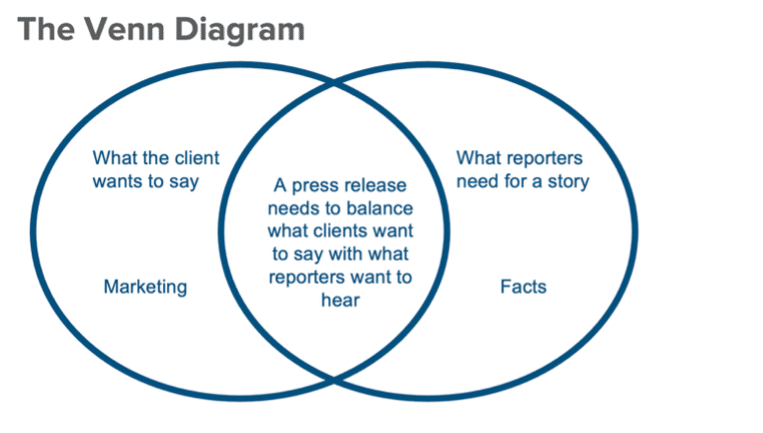
If coverage is the priority, the release must give reporters what they need to move quickly. That means clearly covering the who, what, when, where and why, along with relevant facts and context.
A strong press release balances business messaging with editorial value. It is not a marketing document. If it reads like one, it will likely be ignored.
Write for reporters, not marketers
A press release is not a sales pitch.
It should give a reporter everything needed to write quickly:
- Who
- What
- When
- Where
- Why
Clarity wins. Brevity wins. Facts win.
If it reads like marketing copy, it will get ignored.
The AI factor is now real
Press releases are trusted sources for AI models, so they can shape the answers those systems return. This is evolving fast.
Current GEO data is based on simulated queries and limited SEO signals, but that will improve as platforms add commerce and advertising data.
What is clear today is that press releases influence AI in two ways.
- They help define what a model “knows” about a company if they are part of its training data.
- For real-time queries, models search the web for credible sources. Press releases often meet that standard.
To increase the chance of being used, releases should follow an AI-friendly format. Use a conversational tone. Rely on bullet points where possible. Include three to four key points at the top that summarize the news in plain language.
This is not optional anymore.
The structure that works now
A strong press release follows a clear format:
- Headline: One sentence. State the main message. Avoid jargon.
- Subhead: Adds key detail and context. Explains why the news matters. Limited jargon is fine.
- Key points: Include 3–4 bullets after the subhead. Summarize the news in plain language for AI and skimming.
- Dateline: City, state, and date of release. Use the company’s headquarters.
- Opening sentence: Reinforce the headline and subhead. Cover who, what, where, when, and why.
- First paragraph: Add context and background. Explain why the news matters. The reader should grasp the story here.
- Quote: Usually from an executive. Adds perspective and a human voice. Use it to highlight outcomes. Add third-party quotes if helpful.
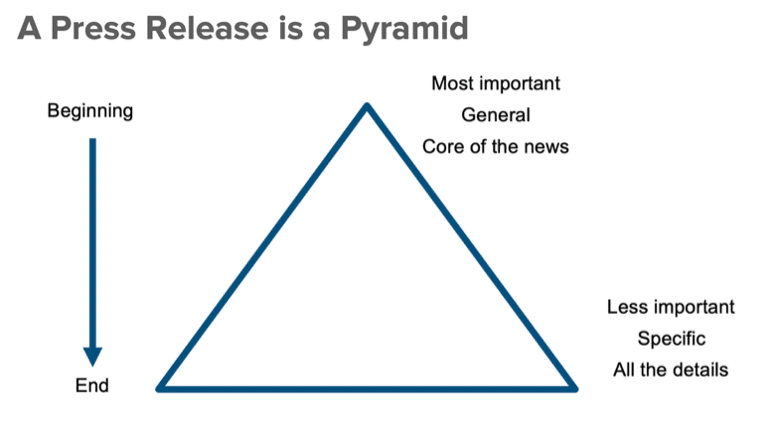
- Body: Expand with details, moving from most to least important. Use bullets where useful. Add context early before capabilities.
- Call to action: Direct readers to next steps. Link to a page, post, or resource.
- Boilerplate and contact: Include a brief company overview (3–5 sentences) and a clear media contact with name, title, phone, and email.
No filler. No excess language.
The bottom line
The press release is still one of the few assets that can: support media coverage, strengthen search visibility, influence AI-generated answers, and align internal and external messaging.
But only if it is written for how information moves today. If you treat it like a checkbox, it will be ignored. If you treat it like infrastructure, it will perform.